Vankka

Manufacturing

Coil in one end. A finished roof out of the other.

Roll-forming, cut-to-length production, folding, finishing and quality control happen in our own facility in Finland. Nothing critical is subcontracted, so nothing critical is outside our control.
Production floor area
On request
Roll-forming lines
On request
Maximum sheet length
On request
Maximum fold length
On request
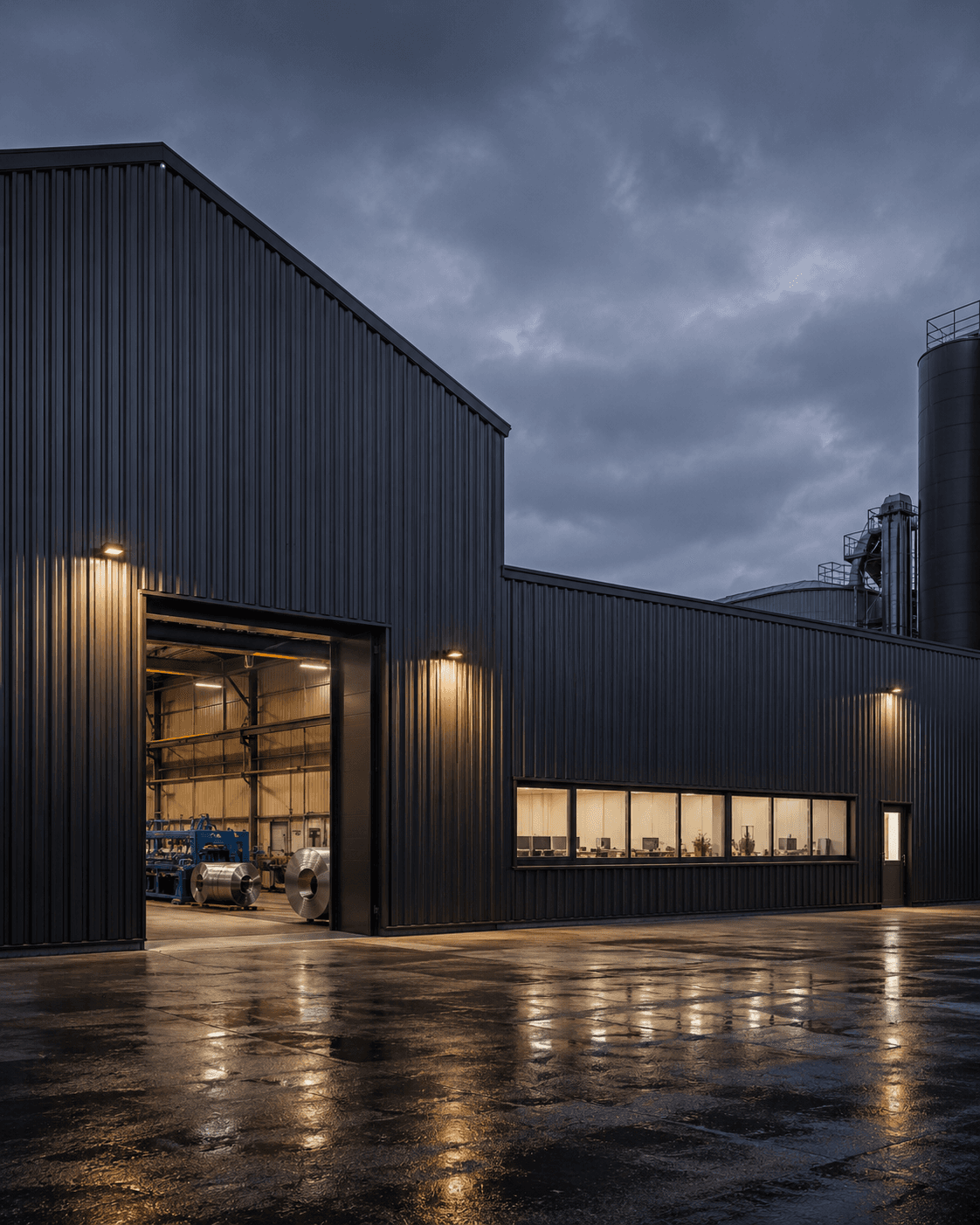
VANKKA production hall — roll-forming lines and coil handling

Principles

What in-house manufacturing actually buys you.

Owning the process is not the point. What it makes possible is.

Manufacture, not assembly

We form, cut, fold and finish in our own facility. Nothing critical is subcontracted, so nothing critical is outside our control.

Specified for the climate it is made in

Products are engineered for a hundred-degree annual temperature swing, months of standing snow and a freeze-thaw cycle that finds every weak detail.

Traceable to the coil

Every delivery carries its production run and batch. A matching sheet can be produced years later.

Engineered before quoted

If the profile you asked for is wrong for your pitch or span, we say so before the order, not after the roof is on.

The process

Six stages, one facility.

01

Coil selection and handling

Every roof begins as a coil, and every roof is limited by it.

We buy coated steel coil to a specification rather than to a price, because nothing downstream can recover a substrate or a paint system that was wrong to begin with. Grade, thickness, metallic coating weight and paint system are all specified before a coil enters the building.

Incoming coil is checked and recorded against its certification, and batch identity is carried through the whole process — so a replacement sheet ordered years later can be matched to the original production run rather than to a colour name.
02

Roll-forming

Steel is shaped progressively, not bent.

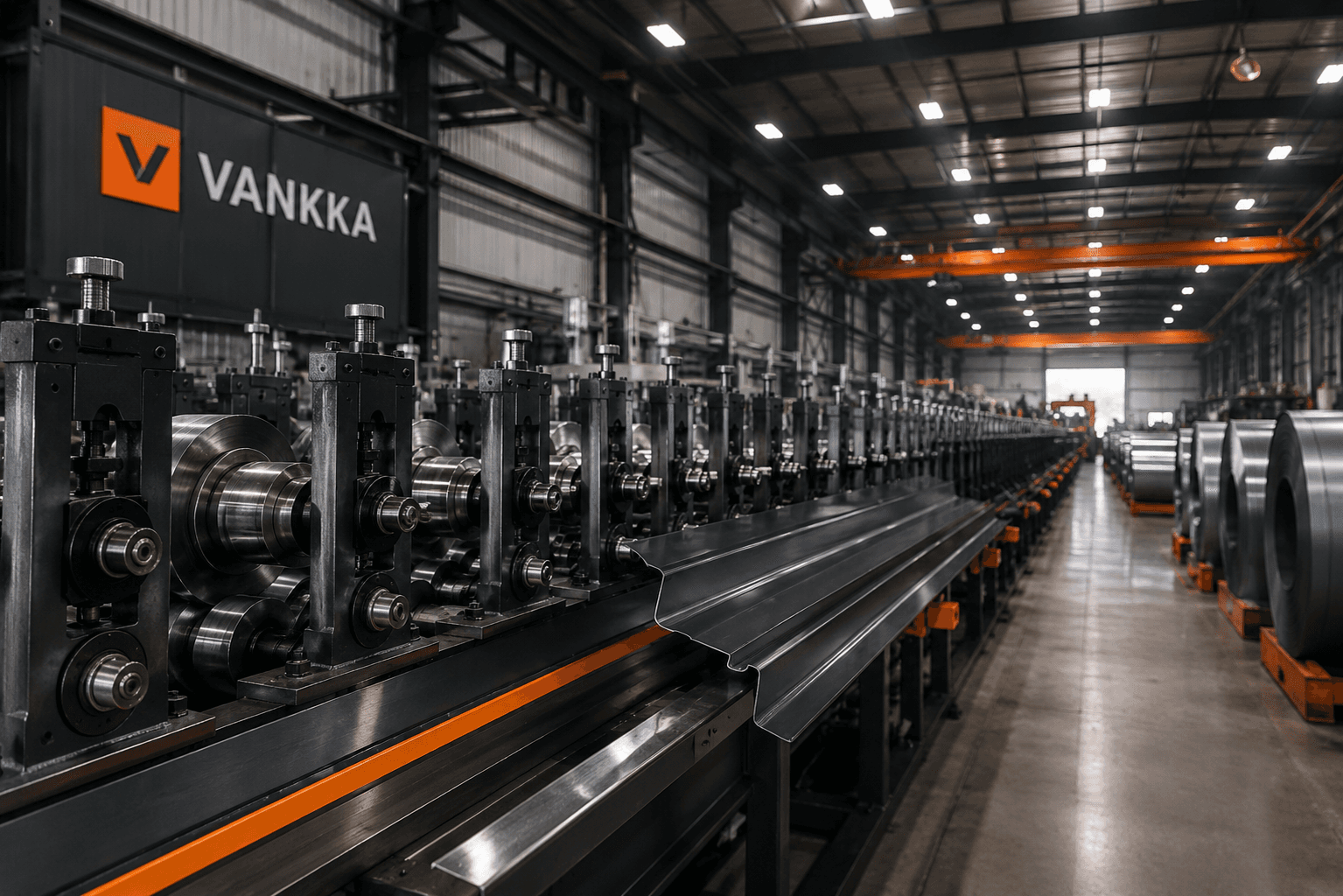
A profile is formed by passing the strip through a sequence of roller stands, each one adding a small amount of the final geometry. Done properly, the steel arrives at the last stand having been persuaded into shape rather than forced, which is what keeps a long sheet straight and free of twist.

Tooling is set and verified for each profile at the start of a run. Cover width, rib height, seam geometry and squareness are measured against the profile drawing before the run is released — the difference between a roof that goes together on site and one that fights the installer for a week.

03

Cut-to-length production

Sheets are produced to the roof, not to a stock length.

Cutting to length is how we produce, not an option on top of it. Sheets are made to the length of the run wherever transport and handling allow, which removes transverse laps from the roof — historically the first place a metal roof leaks and always the first place it looks untidy.

The limits are transport, site access and what a crew can safely handle in wind, not the line. Long-sheet projects are planned with the delivery and the lift together.

04

Folding and bespoke fabrication

The catalogue never covers every junction a real building produces.

Trims and flashings are folded on our own brakes from the same coil as the roof they finish. That is why a VANKKA trim matches a VANKKA roof exactly — same coating batch, same gloss, same colour — where a trim sourced separately in the same nominal colour rarely does.

Bespoke work runs on the same equipment. Send a drawing, a sketch or a site survey; we return a folded profile drawing for approval before anything is produced.

05

Quality control

Measured, not eyeballed.

Dimensional checks against the profile drawing, coating film thickness and adhesion checks, and visual inspection under controlled lighting — carried out through the run rather than as a final gate, so a drifting parameter is caught while it is still a few sheets rather than a few hundred.

Every delivery is traceable to its production run and coil batch. Documentation is issued with the goods, not chased afterwards.

06

Packing and logistics

A roof damaged in transit was manufactured badly.

Coated steel is easy to damage between the line and the site, and damage found on site is expensive for everyone. Packing is specified against the transport method and the journey — a pallet going three hours by truck and a container crossing the Atlantic are packed differently.

For North American deliveries, packing and sheet lengths are coordinated with our Halifax team against the shipping method, which is worth planning early because it can influence how the roof is set out.

Engineering

Specified before it is quoted.

Our technical team sits in the same building as the lines. That is why a specification problem gets caught at enquiry rather than on site.

A profile is chosen against three things: the pitch of the roof, the distance between supports and how the building should look. Get any of them wrong and the roof either leaks, sags or costs more than it needed to.

Where a project needs it, we check spans against load cases, issue a fixing pattern zoned for wind pressure, and draw the junctions that a catalogue does not cover. If the profile you asked for is not the right one, we say so before the order rather than after the roof is on.

Roll-forming stands shaping coated steel on the VANKKA line
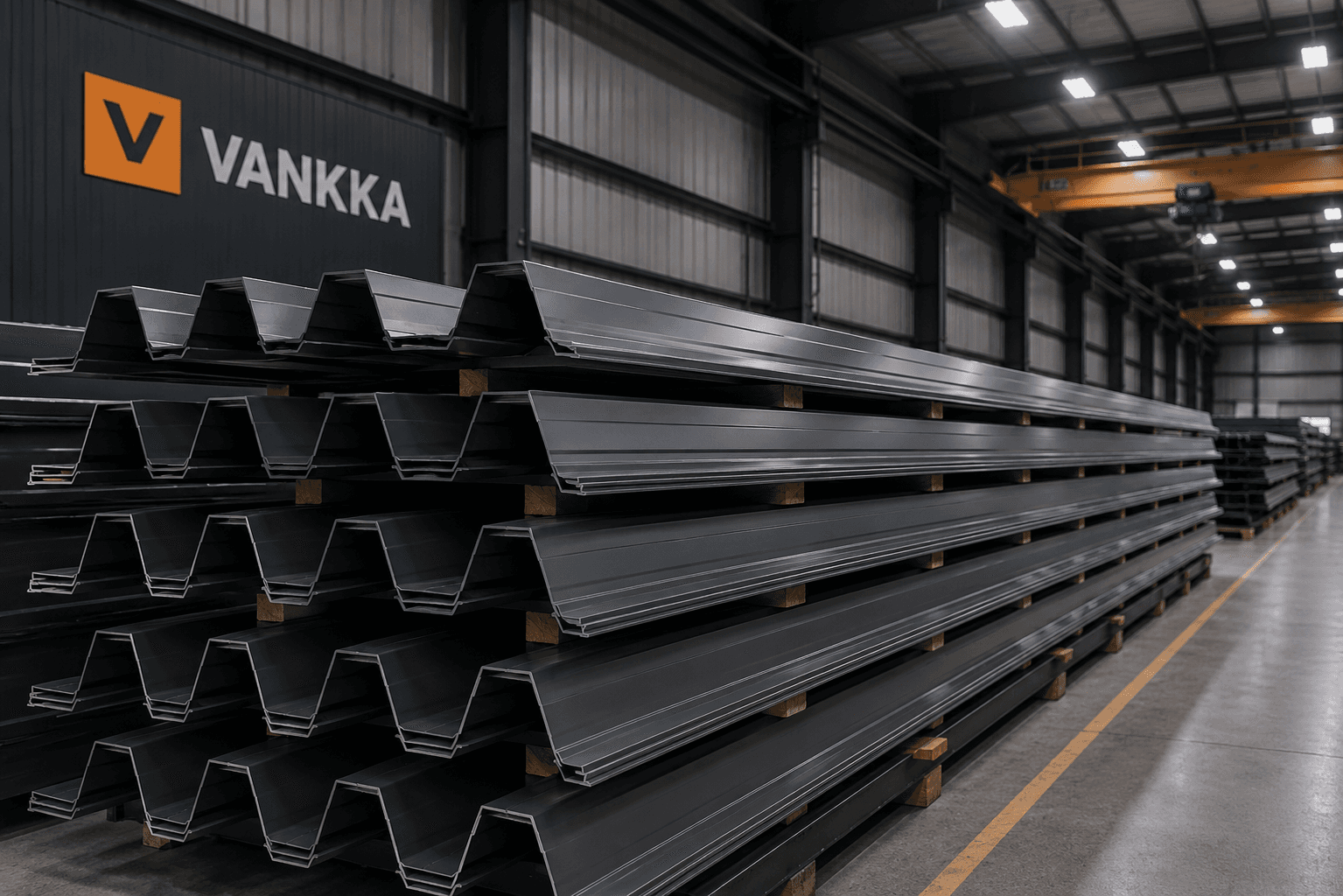
Finished profiled panels stacked for dispatch
Manufacturing | VANKKA